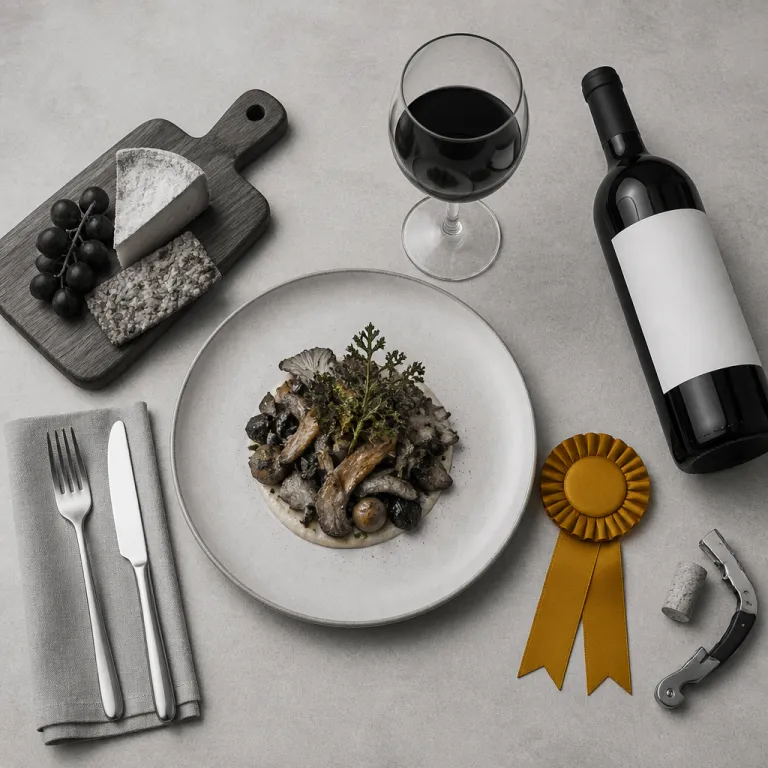
Anvers Wines Adelaide Hills sets a new benchmark for regional dining
Anvers Wines Adelaide Hills has entered the national conversation with a 17-point debut in the Australian Good Food Guide (AGFG) Chef Hat Awards, one of the strongest first-time scores recorded for a South Australian regional restaurant. That result, confirmed in the AGFG listing for Anvers Wines, places the dining room in a small cohort of highly rated venues across Australia and reframes how luxury travellers should think about regional dining in the hills south of Adelaide. For business-leisure guests used to CBD fine dining, this estate now offers a compelling reason to trade city lights for vineyard views.
The AGFG Chef Hat Award is described simply and clearly in the guide itself: "What is the AGFG Chef Hat Award?" and the answer: "A prestigious Australian culinary award recognizing excellence in restaurants." That context matters when you are weighing a long lunch at Anvers Wines Adelaide Hills against a Barossa itinerary built around older names and historic wine accolades. A 17-point review on debut signals not just technical precision in the kitchen, but a fully resolved hospitality experience from cellar door to table, supported by independently assessed scoring and a published review.
Set at 633 Razorback Road in Kangarilla, the Anvers estate sits on the cusp of the Adelaide Hills and McLaren Vale, giving the kitchen and cellar access to two distinct cool-climate and maritime-influenced zones in South Australia. Low-yielding vines on the property and in contracted vineyards feed a range of wines Adelaide drinkers now actively seek out, from structured cabernet sauvignon to fragrant shiraz and textural chardonnay. For hotel guests booking premium stays in the Adelaide Hills, that dual regional identity means one lunch can showcase grape varieties and vintages from both elevated regional slopes and the slightly warmer Fleurieu coast in a single, coherent tasting arc.
The cellar door opens daily from late morning, while the restaurant serves lunch from Thursday to Sunday, which aligns neatly with typical executive travel patterns into Adelaide. You can schedule a morning meeting in the CBD, then be tasting sauvignon blanc, pinot gris and cabernet on the terrace within an hour, before returning to a hills retreat for the evening. One recent guest described the experience as “city-level polish with country calm,” noting the contrast between the quiet of the vineyard and the precision of the wine service.
From a wine perspective, the range at Anvers reflects both the Adelaide Hills and the broader south of the state, with sauvignon and chardonnay from higher sites complementing shiraz and cabernet from slightly warmer parcels. The team works with low-yielding vineyards to keep flavours concentrated, which is why these wines, low in volume, often appear on serious lists in South Australia rather than in mass retail. Expect to see cabernet sauvignon, barbera, pinot gris and sauvignon blanc poured alongside limited vintages that highlight the acta verba motto on the label: deeds, not words, expressed through dense fruit, fine tannins and carefully judged oak.
Ownership and leadership also matter for travellers who value continuity and personality in their wine experiences. The estate has long been associated with Wayne Keoghan and Myriam Keoghan, and regulars often refer to the partnership simply as Wayne and Myriam when talking about the evolution of Anvers. “We always wanted to prove that the Adelaide Hills could deliver city-level dining in a vineyard setting,” Wayne notes, “and the AGFG recognition tells us we are on the right path.” Their decision to bring in winemaking collaborators such as Simon Hackett for certain wines, and to maintain an active presence on channels like Facebook and Instagram, signals a house that understands both heritage and modern communication.
Connor Bishop's Long Story menu and the rise of elevated regional cuisine
The 17-point AGFG score rests largely on what happens on the plate, and Executive Chef Connor Bishop has built a tasting menu at Anvers Wines Adelaide Hills that feels purpose-designed for serious wine travellers. His Long Story menu runs to eight courses in the current Winter Reds format, priced at 145 dollars per person, and it reads like a map of South Australia’s most interesting producers. Seasonal local produce from suppliers such as Fleurieu Milk Company and Spring Ridge venison anchors the experience firmly in the south of the state rather than in a generic modern Australian idiom, with dishes evolving as producers and vintages change.
Where some regional dining rooms lean heavily on rustic charm, Bishop’s kitchen at Anvers is unapologetically technical, using modern Australian cuisine techniques while keeping intervention on the plate minimal. That approach allows the wines from the estate and from partner vineyards in the Adelaide Hills and Fleurieu to speak clearly, whether you are drinking a linear sauvignon blanc, a barrel-fermented chardonnay or a structured shiraz with venison. A typical course might pair delicately smoked ocean fish with buttermilk and citrus, the acidity tuned to a cool-climate white, while slow-cooked venison with charred brassicas leans into the darker fruit of a McLaren Vale red.
The location between the Adelaide Hills and McLaren Vale means Bishop can design dishes that work with both cool-climate and slightly richer south-coast styles in the same sitting. One course might lean into the acidity of a young pinot gris from higher hills sites, while another is calibrated for the darker fruit of a McLaren Vale cabernet or barbera. That flexibility is rare in regional dining, and it is one reason the AGFG panel placed Anvers Wines Adelaide Hills so high on its first formal review, noting the way the menu moves seamlessly from bright, herbal notes to deeper, savoury flavours.
For travellers comparing the hills to the Barossa, this matters: the Barossa excels at depth and heritage, while the Adelaide Hills now offers a more agile, cool-climate expression of South Australian wine culture. Anvers, with its cellar door and restaurant on a single estate, gives you a controlled environment to test that proposition over a long lunch without needing to criss-cross multiple townships. You can taste through current vintages, then see how the same wines behave when paired with Bishop’s precise cooking, which is a level of integration many city venues in Adelaide cannot match.
There is also a sustainability dimension that aligns with the expectations of high-end hotel guests who prioritise environmental credentials. Anvers is a certified member of Sustainable Winegrowing Australia, which means the estate tracks and improves its environmental performance across vineyard and winery operations. For a traveller choosing between several Adelaide wine experiences, that certification, combined with serious wine awards and a 17-point AGFG review, offers a clear signal of long-term intent and a commitment to responsible regional tourism.
To round out a gastronomic stay, consider pairing an Anvers lunch with time in nearby cultural hubs in the Adelaide Hills, where food, art and wine intersect. The creative energy running through places like Hahndorf is captured in this feature on artisans rewriting the village’s brief, which sits comfortably alongside a day built around cellar door visits and regional dining. For business-leisure travellers, that combination of serious wine, thoughtful food and compact cultural stops makes the hills a more efficient and rewarding option than a longer detour to other South Australian wine regions.
What the 17 point debut means for luxury hotel guests planning an Adelaide Hills stay
For travellers using a premium hotel booking website to plan an Adelaide Hills escape, the Anvers Wines Adelaide Hills result changes the calculus of where to base yourself. A restaurant and cellar door that sits among the top-rated venues nationally effectively becomes an anchor around which you can build a two or three night itinerary. That is especially true for executives extending Adelaide business trips, who can now justify a short transfer into the hills for a lunch that carries the same culinary weight as a major city reservation.
Practically, the lunch-only service from Thursday to Sunday at Anvers means you should align your hotel booking with those days if the Long Story menu is a priority. Book well ahead, as the combination of AGFG recognition and limited seating will compress availability, particularly during events such as the Winter Reds Long Story experience. Reservations can be made directly with the estate via phone or online booking form, and securing your table before locking in flights and accommodation reduces the risk of missing out on preferred dates.
When assessing properties, look for hotels that understand the rhythm of regional dining in South Australia, including flexible check-in times and transfer options to and from cellar doors. Many high-end operators in the Adelaide Hills now offer private car services or can arrange drivers, which is essential if you plan to explore multiple producers in a single day. Anvers, with its focus on low-yielding vineyards and detailed wine service, rewards unhurried tasting, so building in transport support is a mark of good trip planning rather than indulgence.
The broader region is also evolving, with stone villages and small townships quietly lifting their game to meet the expectations of guests drawn by venues like Anvers Wines Adelaide Hills. Places such as Mount Torrens, profiled in this piece on stone villages the highway misses, offer a slower counterpoint to the intensity of a multi-course tasting menu. Combining those quieter stops with a headline lunch at Anvers creates a layered experience that feels more like a considered retreat than a simple wine tour.
For wine-focused travellers, the estate’s range provides enough depth to justify repeat visits across different seasons. You might focus on sauvignon blanc, chardonnay and pinot gris from the Adelaide Hills during one stay, then return to explore shiraz, cabernet sauvignon and barbera sourced from slightly warmer Fleurieu and South Australian sites. Each visit offers a fresh review of how the grape varieties and vintages are evolving, which is exactly what you want from a cellar door that takes its wine awards and sustainability commitments seriously.
Ultimately, the 17-point AGFG debut for Anvers Wines Adelaide Hills signals that the hills are no longer just a pleasant add-on to an Adelaide itinerary, but a primary destination for elevated regional dining. For luxury hotel guests, that means the question is no longer whether to allocate a night in the hills, but how many. With the estate’s acta verba philosophy, the steady presence of Wayne Keoghan and Myriam Keoghan, collaborations with figures like Simon Hackett and a visible digital footprint on platforms such as Facebook and Instagram, the message is clear: this is a South Australian address that now sits comfortably on any serious global wine traveller’s list.
References
Australian Good Food Guide (AGFG)
Australian Traveller
Sustainable Winegrowing Australia